Loading...
Medford Concrete Company handles stamped concrete, driveway replacement, garage floors, sidewalk building, and foundation work throughout Manchester, NH - from the South End and North End to Rimmon Heights and the West Side - serving New Hampshire's largest city on its mix of mill-era homes and newer subdivisions. Licensed, insured, and ready to respond within one business day.
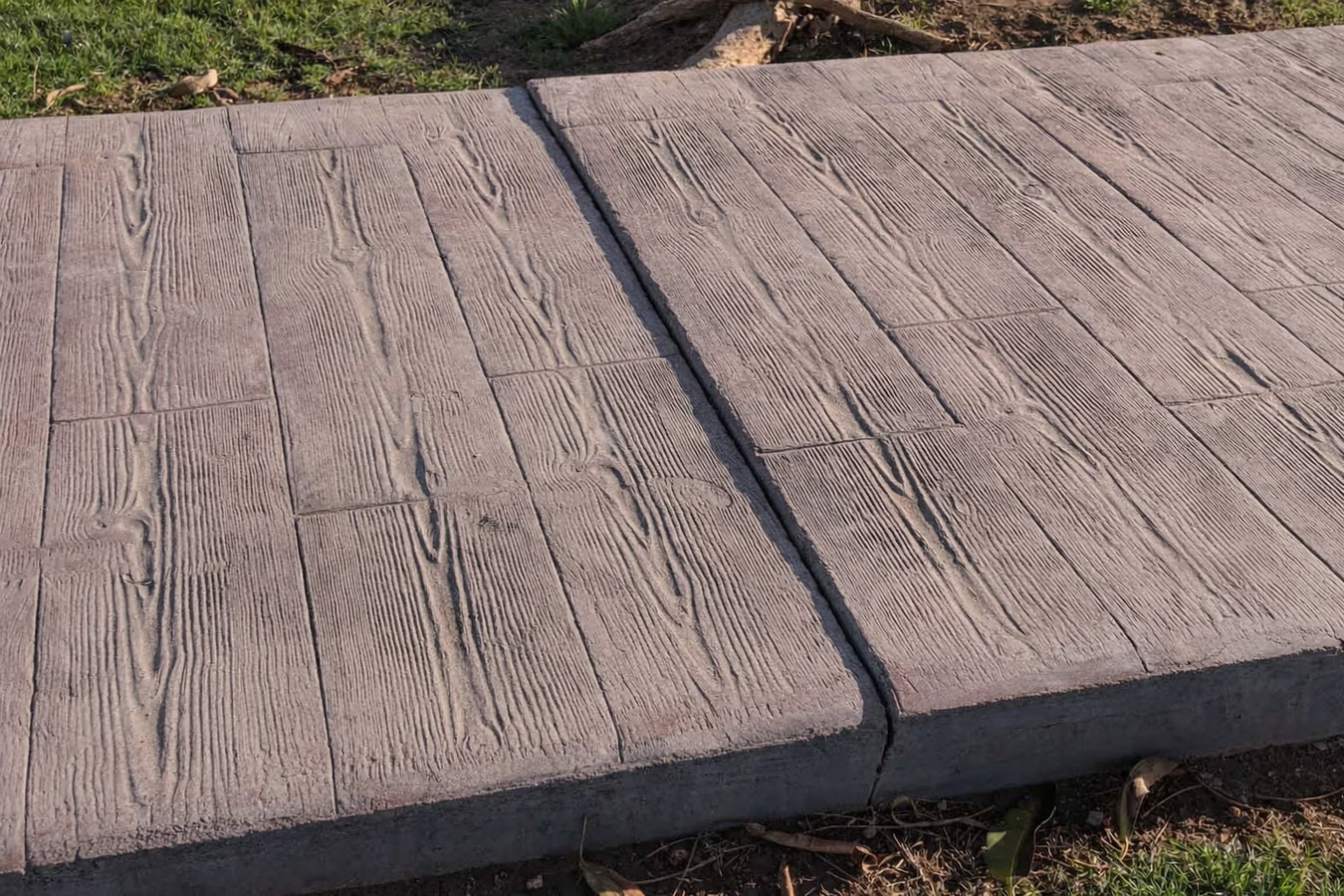
Manchester homeowners updating older front walkways, patios, or driveway aprons on pre-1940 South End and North End properties increasingly choose stamped concrete for the finished appearance it delivers without the shifting and resetting that individual pavers require over time. Properly sealed stamped concrete handles Manchester's 60 inches of annual snow and the deep freeze-thaw cycles that follow without the surface degradation that poor-quality installs show by the second spring. See our stamped concrete work.
Driveways on Manchester's tight urban lots - especially the narrow, side-entry pads common in the South End and North End - take the full force of 60 inches of snow, repeated freeze-thaw cycles, and road salt tracked in from Elm Street and the surrounding neighborhood roads every winter. Original driveways on homes built for mill workers more than 100 years ago were not designed to last through a century of New Hampshire winters, and replacement on a properly compacted base outperforms repeated patching every time.
Manchester's winters mean road salt is tracked into garages from November through March, and an unsealed or aging garage floor on a home built before 1960 will pit and flake under that exposure. Newer West Side subdivisions built in the 1980s and 1990s also see original garage slabs reaching the age where cracks and surface scaling signal it is time for a full replacement on a properly compacted base with adequate thickness for vehicle loads.
Triple-deckers and two-family homes throughout Manchester's older neighborhoods have front walkways used by multiple households every day. After decades of freeze-thaw stress, the original concrete on these properties often shows heaved panels, crumbled edges, and uneven sections that create a real trip hazard. Replacement with a proper base and control joints produces a surface that stays level through Manchester winters and meets current New Hampshire accessibility requirements.
Front and rear steps on Manchester's older multi-family homes handle constant daily use from multiple units and face the same freeze-thaw damage as any other concrete surface. When steps crack, pull away from the foundation, or develop a lean from years of frost heave, new concrete steps anchored to a proper footing base restore a safe, level entry and eliminate the liability of damaged steps on a rental or owner-occupied property.
Homes on Manchester's sloped streets - particularly on the western edges of the city where newer subdivisions sit on uneven terrain - often have retaining walls managing soil pressure against the foundation or along the driveway edge. When those walls begin to crack or lean from hydrostatic pressure buildup over wet winters, a reinforced concrete wall with drainage installed behind it handles the load without the annual repair cycle that failing masonry block walls require.
Manchester is New Hampshire's largest city and one of its oldest, with a significant share of its housing stock dating to the late 1800s and early 1900s when the Amoskeag mills made the city one of the largest textile producers in the world. Those mill-worker homes in the South End and North End were built on the tight lots and minimal setbacks of their era, and the original concrete driveways, walkways, and foundations installed alongside them were not built to survive a century of New Hampshire winters. The city averages about 60 inches of snow per year, and frost depth in southern New Hampshire can reach 4 feet or more in a hard winter. The resulting freeze-thaw damage is visible on nearly every pre-war block in the city: cracked driveways, heaved walkways, and steps that have pulled away from the foundation after decades of frost pressure.
Manchester's dense older neighborhoods present access challenges that newer suburban cities do not. Lots in the South End and North End are tight, with homes close together and limited room for equipment staging. The West Side and outer neighborhoods - built mostly from the 1980s forward - have more space but their own concrete demands: homes at the 30 to 40 year mark where original garage slabs and driveways are showing age-related cracking and surface deterioration. The mix of old urban housing and newer suburban stock means Manchester requires a contractor who can work in both environments and knows what conditions to expect in each neighborhood.
Concrete work in Manchester's older neighborhoods means tight lots where a ready-mix truck sometimes cannot reach the pour directly, older homes where the original subbase under a driveway or walkway needs to be assessed and corrected before any new concrete goes down, and multi-family properties where repairs often affect shared surfaces used by more than one household. Permit applications for structural concrete work run through the City of Manchester Building Inspections Division, and we handle that process as part of every job that requires one.
Manchester centers on Elm Street downtown - the main commercial corridor most locals picture when they think of the city - and extends from the dense mill-era neighborhoods close to the Merrimack River out to quieter residential streets near the city's edge. SNHU Arena anchors downtown and sits a few blocks off Elm Street, and the old Amoskeag Millyard along the river has been converted into offices and apartments that reflect how much the city has changed since the mills closed. We know the difference between working on a South End triple-decker with a narrow shared driveway and a West Side colonial with a two-car garage, and we plan accordingly.
We also serve homeowners in Medford, MA, where a similar mix of pre-1940 housing and freeze-thaw winters creates the same concrete replacement demands, and in Lowell, MA, another mill city where the housing stock and climate conditions mirror what we handle throughout Manchester every season.
We respond within one business day. Tell us your Manchester neighborhood, what you are replacing or building, and whether the property is single-family or multi-unit. That context shapes the site visit and means we arrive already aware of the access and base conditions typical for that part of the city.
We walk the Manchester property, check the existing surface, assess site access for equipment and the concrete truck, and look at the surrounding drainage. On tight lots in the South End and North End we factor access constraints directly into the estimate. A written, itemized quote arrives within one to two days - no surprise charges after work begins.
If the job requires a permit, we file with the City of Manchester Building Inspections Division and coordinate any required inspections before the crew arrives. We confirm your start date once permits are in hand and the schedule is locked - Manchester's concrete season fills fast in spring and early fall, so we communicate the timeline clearly from the start.
The crew removes the old surface, prepares and compacts the base, pours and finishes the concrete, and clears the site. You receive written curing instructions covering when the surface is safe for foot traffic, vehicle use, and stamped-surface sealing - so you know exactly what to avoid and for how long.
We cover all of Manchester and respond within one business day. Stamped concrete, driveways, garage floors, sidewalks - straight answers on cost and timeline, no pressure.
(781) 628-7985Manchester is New Hampshire's largest city, with roughly 115,000 residents spread across neighborhoods that range from dense mill-era blocks to newer suburban subdivisions on the city's edges. The city grew up around the Amoskeag Manufacturing Company, whose massive brick mill buildings along the Merrimack River once made it one of the largest textile operations in the world. Those mills closed in 1936, but the South End and North End neighborhoods built for the mill workforce are still home to thousands of families today. Triple-deckers and two-family homes are common throughout the older parts of the city, sitting on tight lots with narrow driveways and small yards. The Amoskeag Millyard has since been converted into offices, apartments, and restaurants - one of the most recognizable landmarks in New Hampshire.
Elm Street is Manchester's main downtown corridor, lined with businesses and historic buildings that stretch from the Millyard to the commercial center of the city. SNHU Arena sits a few blocks off Elm Street and serves as the city's main event venue and home to the Manchester Monarchs hockey team. Beyond the older urban core, the West Side and outer neighborhoods have newer Colonial and Cape Cod homes on larger lots built mostly from the 1980s onward - a very different set of concrete needs from the original urban housing closer to downtown. We also serve homeowners in neighboring Nashua, where similar mill-era downtown housing and New Hampshire winters create the same concrete repair and replacement demands we handle throughout Manchester.
Durable concrete driveways designed and poured to last for decades.
Learn moreCustom concrete patios that extend your outdoor living space beautifully.
Learn moreDecorative stamped concrete replicating brick, stone, and other textures.
Learn moreSafe, smooth concrete sidewalks built to code for homes and businesses.
Learn moreTough, finished garage floor concrete that holds up to heavy daily use.
Learn moreArtistic decorative concrete finishes for interior and exterior surfaces.
Learn moreStructural concrete retaining walls that control erosion and grade changes.
Learn morePrecision concrete floor installation for residential and commercial spaces.
Learn moreSlip-resistant, attractive concrete pool decks built for outdoor environments.
Learn moreSolid concrete steps crafted for safety and lasting curb appeal.
Learn moreLevel, reinforced slab foundations engineered for new construction projects.
Learn moreFull foundation installation services for residential and light commercial builds.
Learn moreLong-lasting concrete parking lots designed for high-traffic commercial use.
Learn moreProperly sized and poured concrete footings that support lasting structures.
Learn moreExpert foundation raising to correct settling and restore structural integrity.
Learn morePrecision concrete cutting for modifications, repairs, and utility access.
Learn moreServing these cities and communities.
Call us or send a message and we will respond within one business day. Manchester's concrete season fills fast each spring - reach out now to get on the schedule.